
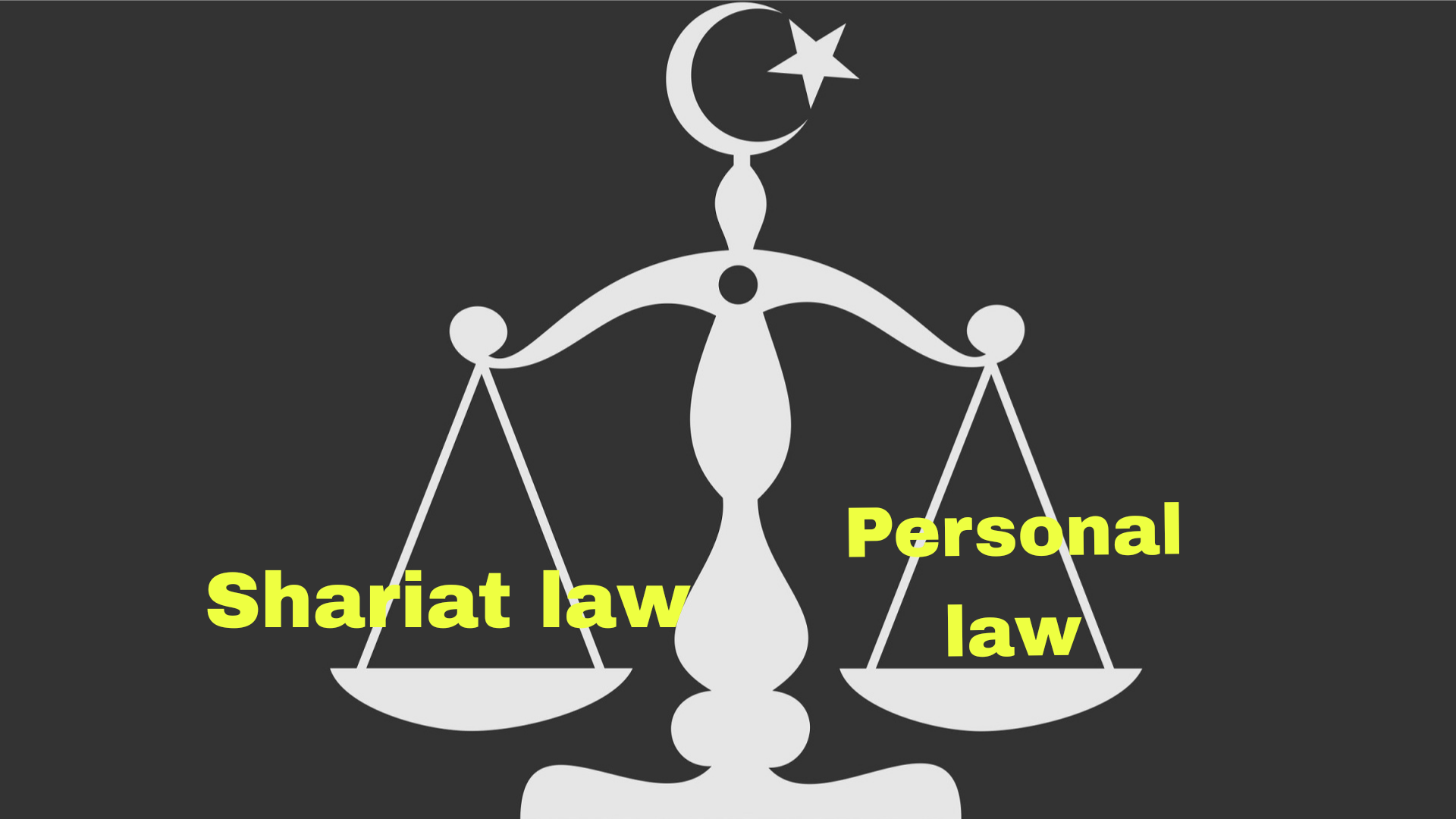
Breaking Legal Clarification — The Claim vs Reality
The statement that all States/UTs have framed rules to implement Shariat law is legally incorrect.
In India, Shariat is not implemented through state-made rules.
It operates through a central legislation applicable nationwide.
The Law That Defines Shariat in India”
Primary Law :
Muslim Personal Law (Shariat) Application Act, 1937
Enacted by Central Legislature (pre-independence).
Applies uniformly across India.
Governs personal matters of Muslims such as:
marriage
divorce
inheritance
maintenance
guardianship
succession
States do not create separate Shariat laws; they only administer courts and procedures.
“Where the Constitution Anchors Personal Laws”
Relevant constitutional provisions:
Article 25 — Freedom of religion (practice & profession).
Article 26 — Right to manage religious affairs.
Article 44 — Directive Principle encouraging Uniform Civil Code.
Article 13 — Laws inconsistent with Fundamental Rights can be struck down.
States & UTs: Administrators, Not Lawmakers”
States/UTs do not legislate Shariat rules. Their role is limited to:
Setting up civil courts and family courts.
Enforcing judgments.
Providing procedural frameworks.
Substantive Muslim personal law still comes from:
1937 Act judicial precedent classical Islamic jurisprudence sources.
Judgments That Shaped Shariat Law in India”
Mohd. Ahmed Khan v. Shah Bano Begum (1985) — Maintenance rights of Muslim women recognized under secular criminal law.
Sarla Mudgal v. Union of India (1995) — Misuse of conversion to Islam for second marriage declared invalid.
Daniel Latifi v. Union of India (2001) — Interpreted Muslim Women Act to ensure fair maintenance.
Shayara Bano v. Union of India (2017) — Instant triple talaq declared unconstitutional by the Supreme Court of India.
Final Take — “The Legal Reality Verdict”
India does not run separate state-wise Shariat systems.Muslim personal law operates under a central statutory framework interpreted by courts, and every provision remains subject to constitutional scrutiny. The judiciary has consistently affirmed that religious law cannot override fundamental rights, ensuring that personal laws function within the boundaries of constitutional justice.