What is Lokpal and Lokayukta?
The Lokpal and Lokayukta are independent statutory anti-corruption institutions established under the Lokpal and Lokayuktas Act, 2013 to investigate allegations of corruption against public officials.
The Lokpal functions at the Union (Central Government) level, while the Lokayukta functions at the State Government level. Their primary role is to ensure accountability, transparency, and integrity in public administration by inquiring into complaints of corruption against specified public functionaries.
These institutions are statutory bodies, meaning they are created by an Act of Parliament, and they do not have constitutional status. They perform the role of an Ombudsman—an independent authority appointed to receive, investigate, and address complaints against public authorities regarding corruption and maladministration.
The Lokpal and Lokayuktas Act, 2013 was enacted by the Parliament of India to strengthen the country’s anti-corruption framework. The Act received the President’s assent on 1 January 2014 and came into force on 16 January 2014. It mandates the establishment of a Lokpal at the Central level and Lokayuktas in the States.
In simple terms:
- Lokpal is the anti-corruption watchdog for the Central Government.
- Lokayukta is the anti-corruption watchdog for the State Governments.
- Both institutions investigate complaints of corruption against public servants and help promote good governance, accountability, and transparency in public administration.
Background, Origin and History of the Lokpal and Lokayukta
1. Introduction
The Lokpal and Lokayukta are anti-corruption institutions established to investigate allegations of corruption against public servants and promote transparency and accountability in public administration. The concept has evolved over two centuries, beginning with the Ombudsman institution in Sweden and eventually leading to the enactment of the Lokpal and Lokayuktas Act, 2013 in India.
2. Origin of the Ombudsman Concept
The concept of Lokpal and Lokayukta is derived from the Ombudsman, which is not of Indian origin.
Meaning of Ombudsman
An Ombudsman is an independent public authority appointed to investigate complaints made by citizens against government departments, public officials, or public authorities. The institution aims to ensure accountability, fairness, and good governance.
Evolution of the Ombudsman Institution
Sweden (1809)
- The institution of the Ombudsman was officially established in Sweden in 1809.
- Sweden became the first country in the world to create an independent authority to investigate complaints against public officials.
Growth after the Second World War
- During the 20th century, particularly after the Second World War, the Ombudsman system expanded rapidly across democratic countries.
- It became an important mechanism for protecting citizens’ rights and ensuring administrative accountability.
New Zealand and Norway (1962)
- New Zealand and Norway adopted the Ombudsman system in 1962.
- Their successful implementation encouraged many other countries to establish similar institutions.
Great Britain (1967)
- Based on the recommendations of the Whyatt Report, 1961, Great Britain adopted the Ombudsman institution in 1967.
- It became the first major democratic nation to establish a modern Ombudsman system.
Guyana (1966)
- Guyana became the first developing country to adopt the Ombudsman institution in 1966.
Adoption by Other Countries
Following its success, the Ombudsman system was adopted by several countries, including:
- Mauritius
- Singapore
- Malaysia
- India
3. Beginning of the Lokpal Concept in India
The idea of establishing an Indian Ombudsman emerged during the early 1960s as a measure to strengthen accountability and combat corruption in public administration.
Proposal by Ashok Kumar Sen
- In the early 1960s, the then Union Law Minister, Ashok Kumar Sen, first proposed the establishment of a Constitutional Ombudsman in the Indian Parliament.
Coining of the Terms “Lokpal” and “Lokayukta”
- In 1963, Dr. Laxmi Mall Singhvi (L. M. Singhvi), a Member of Parliament, coined the terms “Lokpal” and “Lokayukta” during a parliamentary debate on grievance redressal mechanisms.
- The term Lokpal refers to the anti-corruption authority at the Union level, while Lokayukta refers to the corresponding institution at the State level.
4. Recommendations of the First Administrative Reforms Commission (1966)
In 1966, the First Administrative Reforms Commission (ARC), chaired by Morarji Desai, recommended the establishment of two independent anti-corruption authorities:
- Lokpal at the Central Government level.
- Lokayukta at the State Government level.
Purpose of the Recommendation
The Commission recommended these institutions to:
- Investigate complaints against public functionaries.
- Redress citizens’ grievances.
- Promote integrity in public administration.
- Ensure accountability of Ministers, Members of Parliament, and government officials.
These recommendations laid the foundation for India’s future anti-corruption framework.
A. Chairpersons of the Lokpal of India
| S. No. | Chairperson (Lokpal) | Tenure | Remarks |
|---|---|---|---|
| 1 | Justice Pinaki Chandra Ghose | 23 March 2019 – 27 May 2022 | First Chairperson of the Lokpal of India |
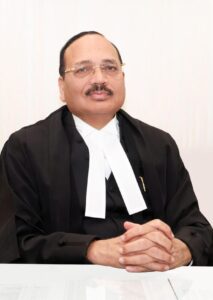
| 2 | Justice Ajay Manikrao Khanwilkar | 27 March 2024 – Present | Current Chairperson of the Lokpal of India |
Note:
- The Lokpal and Lokayuktas Act, 2013 came into force on 16 January 2014.
- The first Lokpal was appointed only in 2019 after the constitution of the Selection Committee.
5. First State to Establish a Lokayukta
- Maharashtra became the first State in India to establish a Lokayukta.
- It enacted the Maharashtra Lokayukta and Upa-Lokayuktas Act, 1971.
6. Journey of the Lokpal Bill
The enactment of the Lokpal law took several decades.
1968
- The Lokpal Bill was introduced in the Lok Sabha for the first time.
- It was passed by the Lok Sabha.
- However, it lapsed due to the dissolution of the Lok Sabha before it could become law.
Repeated Attempts
- After 1968, the Bill was introduced several times.
- Each time, it lapsed because Parliament was dissolved or the Bill was not passed.
- By 2011, eight attempts had been made to enact the Lokpal law, but all were unsuccessful.
7. Important Committees and Commissions
Commission to Review the Working of the Constitution (2002)
- Chaired by Justice M. N. Venkatachaliah.
- Recommended the establishment of Lokpal and Lokayuktas.
- Suggested that the Prime Minister should remain outside the jurisdiction of the Lokpal.
Second Administrative Reforms Commission (2005)
- Chaired by Veerappa Moily.
- Recommended that the office of the Lokpal should be established without further delay.
- Emphasised the need for an independent anti-corruption institution.
Group of Ministers (2011)
- In 2011, the Government of India constituted a Group of Ministers under the chairmanship of Pranab Mukherjee.
- The Group examined proposals for the Lokpal Bill and recommended measures to strengthen India’s anti-corruption framework.
8. India Against Corruption Movement
One of the most significant developments leading to the enactment of the Lokpal law was the nationwide anti-corruption movement.
Anna Hazare Movement
- In 2011, social activist Anna Hazare launched the India Against Corruption (IAC) Movement.
- The movement demanded the establishment of a strong and independent Lokpal.
- It received widespread public support across the country.
- The movement placed significant pressure on the United Progressive Alliance (UPA) Government to enact anti-corruption legislation.
The movement played a crucial role in accelerating the passage of the Lokpal Bill.
9. Enactment of the Lokpal and Lokayuktas Act, 2013
The Lokpal Bill introduced in 2011 underwent parliamentary scrutiny before becoming law.
Legislative History
- 22 December 2011 – Lokpal and Lokayuktas Bill, 2011 introduced in the Lok Sabha.
- 27 December 2011 – Passed by the Lok Sabha.
- 29 December 2011 – Introduced in the Rajya Sabha.
- 17 December 2013 – Passed by the Rajya Sabha with amendments.
- 18 December 2013 – Amended Bill passed by the Lok Sabha.
- 1 January 2014 – Received the assent of President Pranab Mukherjee.
- 16 January 2014 – The Lokpal and Lokayuktas Act, 2013 came into force.
The Act mandated the establishment of:
- Lokpal at the Union level.
- Lokayukta at the State level.
10. Lokpal and Lokayukta (Amendment) Act, 2016
Parliament enacted the Lokpal and Lokayukta (Amendment) Act, 2016 to address practical issues in implementing the 2013 Act.
Major Amendments
Selection Committee
- In the absence of a recognised Leader of Opposition (LoP) in the Lok Sabha, the leader of the single largest opposition party became a member of the Lokpal Selection Committee.
Amendment to Section 44
Section 44 originally required every public servant to declare:
- Assets and liabilities.
- Assets and liabilities of spouse and dependent children.
within 30 days of joining public service.
The Amendment:
- Removed the fixed 30-day time limit.
- Allowed declarations to be made in the form and manner prescribed by the Central Government.
NGOs Covered
The Act also applies to certain non-governmental organisations.
An NGO falls within the jurisdiction of the Lokpal if it:
- Receives more than ₹1 crore from the Government, or
- Receives foreign contributions exceeding ₹10 lakh in a financial year.
The Amendment extended the time for trustees and board members to declare their assets and liabilities.
11. Timeline of Important Events
| Year | Event |
|---|---|
| 1809 | Ombudsman institution established in Sweden. |
| 1961 | Whyatt Report recommended the Ombudsman system in Great Britain. |
| 1962 | New Zealand and Norway adopted the Ombudsman institution. |
| 1963 | Dr. L. M. Singhvi coined the terms “Lokpal” and “Lokayukta”. |
| 1966 | First Administrative Reforms Commission recommended Lokpal and Lokayukta. |
| 1966 | Guyana became the first developing country to adopt the Ombudsman institution. |
| 1968 | First Lokpal Bill passed in the Lok Sabha but lapsed. |
| 1971 | Maharashtra became the first State to establish a Lokayukta. |
| 2002 | Constitution Review Commission headed by Justice M. N. Venkatachaliah recommended Lokpal and Lokayuktas. |
| 2005 | Second Administrative Reforms Commission recommended immediate establishment of Lokpal. |
| 2011 | Group of Ministers headed by Pranab Mukherjee examined the Lokpal Bill. |
| 2011 | India Against Corruption Movement led by Anna Hazare. |
| 17 December 2013 | Lokpal Bill passed by the Rajya Sabha. |
| 18 December 2013 | Lokpal Bill passed by the Lok Sabha after amendments. |
| 1 January 2014 | Presidential assent received. |
| 16 January 2014 | Lokpal and Lokayuktas Act, 2013 came into force. |
| 2016 | Lokpal and Lokayukta (Amendment) Act enacted. |
Quick Revision
- The concept of Lokpal and Lokayukta originated from the Swedish Ombudsman (1809).
- Ashok Kumar Sen first proposed the idea of a Constitutional Ombudsman in India.
- Dr. L. M. Singhvi coined the terms Lokpal and Lokayukta in 1963.
- The First Administrative Reforms Commission (1966) recommended establishing Lokpal and Lokayukta.
- Maharashtra was the first State to establish a Lokayukta in 1971.
- The Lokpal Bill was first introduced in 1968 but lapsed.
- By 2011, eight attempts to enact the law had failed.
- The India Against Corruption Movement, led by Anna Hazare, played a major role in the enactment of the law.
- The Lokpal and Lokayuktas Act, 2013 received Presidential assent on 1 January 2014 and came into force on 16 January 2014.
- The Lokpal and Lokayukta (Amendment) Act, 2016 modified the Selection Committee and the provisions relating to declaration of assets and liabilities.
Lokayuktas in India – State-wise Establishment
Before the enactment of the Lokpal and Lokayuktas Act, 2013, several States had already established the institution of Lokayukta through their respective State legislations.
- Maharashtra was the first State to establish a Lokayukta in 1971.
- Although Odisha enacted the Odisha Lokpal and Lokayuktas Act, 1970, it came into force only in 1983.
- At present, 20 States and 2 Union Territories (Delhi and Jammu & Kashmir) have established the institution of Lokayukta.
State-wise List of Lokayuktas
| S. No. | State / Union Territory | Year of Establishment |
|---|---|---|
| 1 | Odisha* | 1970 |
| 2 | Maharashtra | 1971 |
| 3 | Rajasthan | 1973 |
| 4 | Bihar | 1974 |
| 5 | Uttar Pradesh | 1975 |
| 6 | Madhya Pradesh | 1981 |
| 7 | Andhra Pradesh | 1983 |
| 8 | Himachal Pradesh | 1983 |
| 9 | Karnataka | 1985 |
| 10 | Assam | 1985 |
| 11 | Gujarat | 1986 |
| 12 | Punjab | 1995 |
| 13 | National Capital Territory (NCT) of Delhi | 1995 |
| 14 | Kerala | 1999 |
| 15 | Jharkhand | 2001 |
| 16 | Chhattisgarh | 2002 |
| 17 | Haryana | 2002 |
| 18 | Uttarakhand | 2002 |
| 19 | Union Territory of Jammu & Kashmir** | 2002 |
| 20 | West Bengal | 2003 |
| 21 | Tripura | 2008 |
| 22 | Goa | 2011 |
Notes
- Odisha* enacted the Lokayukta law in 1970, but it became operational only in 1983.
- Jammu & Kashmir established a Lokayukta in 2002 under its erstwhile State law. After the Jammu and Kashmir Reorganisation Act, 2019, it became a Union Territory, and its legal framework has since undergone changes.
Structure and Composition of the Lokpal
The Lokpal is a multi-member statutory body established under the Lokpal and Lokayuktas Act, 2013 to inquire into allegations of corruption against specified public functionaries at the Union level.
The Lokpal consists of one Chairperson and not more than eight Members, including both Judicial Members and Non-Judicial Members.
Composition of the Lokpal
The Lokpal is composed of:
- One Chairperson
- A maximum of eight Members
Among the Members:
- At least 50% must be Judicial Members.
- At least 50% of the total Members must belong to the Scheduled Castes (SC), Scheduled Tribes (ST), Other Backward Classes (OBC), Minorities, or Women.
This composition ensures judicial expertise as well as adequate social representation.
Qualifications of the Chairperson
A person appointed as the Chairperson of the Lokpal must be one of the following:
1. Former Chief Justice of India (CJI)
A person who has served as the Chief Justice of India is eligible to be appointed as the Chairperson.
2. Former Judge of the Supreme Court
A former Judge of the Supreme Court of India may also be appointed as the Chairperson.
3. Eminent Person
An eminent individual of impeccable integrity and outstanding ability is also eligible, provided that he or she possesses special knowledge and at least 25 years of experience in one or more of the following fields:
- Anti-corruption policy
- Public administration
- Vigilance
- Finance (including banking and insurance)
- Law
- Management
Judicial Members
The Lokpal must have Judicial Members, who bring judicial expertise and legal experience to the institution.
A Judicial Member must be:
- A former Judge of the Supreme Court, or
- A former Chief Justice of a High Court.
At least half of the total Members of the Lokpal must be Judicial Members.
Non-Judicial Members
The remaining Members may be Non-Judicial Members.
A Non-Judicial Member must be:
- A person of impeccable integrity and outstanding ability, and
- Possess special knowledge and at least 25 years of experience in one or more of the following fields:
- Anti-corruption policy
- Public administration
- Vigilance
- Finance (including banking and insurance)
- Law
- Management
These Members contribute administrative, financial, legal, and policy expertise to the functioning of the Lokpal.
Reservation in the Composition
The Lokpal and Lokayuktas Act, 2013 provides for inclusive representation in the composition of the Lokpal.
Accordingly:
- At least 50% of the total Members shall be from:
- Scheduled Castes (SC)
- Scheduled Tribes (ST)
- Other Backward Classes (OBC)
- Minorities
- Women
This provision promotes diversity and inclusive participation in the institution.
Composition at a Glance
| Particular | Provision |
|---|---|
| Nature of Body | Multi-member statutory body |
| Chairperson | One |
| Maximum Number of Members | Eight |
| Judicial Members | At least 50% of the total Members |
| Social Representation | At least 50% of the Members shall be from SC/ST/OBC/Minorities/Women |
| Chairperson Eligibility | Former CJI, Former Supreme Court Judge, or an eminent person with 25 years’ experience |
| Judicial Member Eligibility | Former Supreme Court Judge or Former Chief Justice of a High Court |
| Non-Judicial Member Eligibility | Eminent person with impeccable integrity and at least 25 years’ experience in specified fields |
Key Points for Examination
- The Lokpal consists of one Chairperson and a maximum of eight Members.
- At least half of the Members must be Judicial Members.
- At least 50% of the Members must belong to SC, ST, OBC, Minorities, or Women.
- The Chairperson may be a former Chief Justice of India, a former Judge of the Supreme Court, or an eminent person with 25 years of experience in specified fields.
- A Judicial Member must be a former Supreme Court Judge or a former Chief Justice of a High Court.
- A Non-Judicial Member must possess impeccable integrity, outstanding ability, and at least 25 years of experience in areas such as anti-corruption policy, public administration, vigilance, finance, law, or management.
Term of Office and Appointment of the Lokpal
Term of Office
The Chairperson and every Member of the Lokpal hold office for a term of five years from the date they enter office or until they attain the age of 70 years, whichever is earlier.
This fixed tenure is intended to ensure the independence, stability, and impartial functioning of the institution.
Appointment of the Chairperson and Members
The Chairperson and Members of the Lokpal are appointed by the President of India.
The appointments are made on the recommendation of a Selection Committee constituted under the Lokpal and Lokayuktas Act, 2013.
Selection Committee
The Selection Committee responsible for recommending the names of the Chairperson and Members consists of the following five members:
- Prime Minister of India – Chairperson of the Selection Committee.
- Speaker of the Lok Sabha.
- Leader of Opposition in the Lok Sabha.
- If there is no recognised Leader of Opposition, the leader of the single largest opposition party in the Lok Sabha becomes a member of the Selection Committee (as provided by the Lokpal and Lokayukta (Amendment) Act, 2016).
- Chief Justice of India (CJI) or a Judge of the Supreme Court nominated by the Chief Justice of India.
- One Eminent Jurist, nominated by the President of India on the recommendation of the other members of the Selection Committee.
Search Committee
Before making its recommendations, the Selection Committee constitutes a Search Committee.
Composition
- The Search Committee consists of at least eight persons.
- It is constituted by the Selection Committee.
Functions
The Search Committee:
- Identifies suitable candidates.
- Examines their qualifications, integrity, and experience.
- Prepares a panel of eligible persons.
- Recommends the names to the Selection Committee for consideration.
The Selection Committee is not bound by the recommendations of the Search Committee and may consider any eligible person for appointment.
Appointment Process
The appointment process follows these steps:
- The Selection Committee constitutes a Search Committee.
- The Search Committee identifies and shortlists eligible candidates.
- The shortlisted names are placed before the Selection Committee.
- The Selection Committee recommends suitable candidates.
- The President of India appoints the Chairperson and Members of the Lokpal based on these recommendations.
Summary Table
| Particular | Provision |
|---|---|
| Appointing Authority | President of India |
| Recommendation Made By | Selection Committee |
| Chairperson of Selection Committee | Prime Minister of India |
| Total Members of Selection Committee | Five |
| Search Committee | At least eight members |
| Tenure | Five years or until attaining the age of 70 years, whichever is earlier |
Key Examination Points
- The President of India appoints the Chairperson and Members of the Lokpal.
- Appointments are made on the recommendation of a five-member Selection Committee.
- The Prime Minister serves as the Chairperson of the Selection Committee.
- The Search Committee, consisting of at least eight persons, assists the Selection Committee by identifying suitable candidates.
- The tenure of the Chairperson and Members is five years or until they attain the age of 70 years, whichever is earlier.
Comparison Between the Central Vigilance Commission (CVC) and Lokpal
| Basis of Comparison | Central Vigilance Commission (CVC) | Lokpal |
|---|---|---|
| Full Name | Central Vigilance Commission | Lokpal |
| Nature | Statutory anti-corruption vigilance body | Statutory anti-corruption ombudsman |
| Established By | Central Vigilance Commission Act, 2003 | Lokpal and Lokayuktas Act, 2013 |
| Year of Establishment | 1964 (by Government Resolution); given statutory status in 2003 | Established under the Act in 2014 |
| Date of Establishment | 11 February 1964 | 16 January 2014 (Act came into force) |
| Constitutional Status | No (Statutory Body) | No (Statutory Body) |
| Headquarters | New Delhi | New Delhi |
| Composition | One Central Vigilance Commissioner (Chairperson) and not more than two Vigilance Commissioners | One Chairperson and not more than eight Members |
| Appointing Authority | President of India | President of India |
| Appointment Recommendation | Committee comprising the Prime Minister, Union Home Minister, and Leader of Opposition in the Lok Sabha | Selection Committee comprising the Prime Minister, Speaker of Lok Sabha, Leader of Opposition in Lok Sabha, Chief Justice of India (or a Supreme Court Judge nominated by the CJI), and one Eminent Jurist |
| Administrative Ministry | Ministry of Personnel, Public Grievances and Pensions (Department of Personnel and Training) | No administrative ministry; functions as an independent statutory body under the Lokpal and Lokayuktas Act, 2013 |
| Jurisdiction | Central Government departments, Central Government employees, Public Sector Undertakings (PSUs), Public Sector Banks, Insurance Companies, Autonomous Bodies and other organisations under the Central Government | Prime Minister (subject to statutory safeguards), Union Ministers, Members of Parliament, Group A, B, C and D Central Government officials, and specified persons under the Lokpal Act |
| Main Function | Supervises vigilance administration and advises departments on corruption cases | Inquires into and investigates allegations of corruption against specified public functionaries |
| Investigative Power | Supervisory role over vigilance administration; supervises investigations by agencies such as the CBI in corruption cases but generally does not conduct criminal investigations itself | May order preliminary inquiry, direct investigation (including through agencies like the CBI), and initiate prosecution under the Act |
| Supervision over CBI | Exercises superintendence over the CBI in corruption cases under the Prevention of Corruption Act | Exercises superintendence over the CBI in cases referred by the Lokpal under the Lokpal Act |
| Search Committee | Not applicable | Yes, a Search Committee of at least eight persons assists the Selection Committee |
| Term of Office | Four years or until attaining the age of 65 years, whichever is earlier | Five years or until attaining the age of 70 years, whichever is earlier |
| Removal | By the President of India in accordance with the Central Vigilance Commission Act, 2003 | By the President of India on the grounds and in the manner provided under the Lokpal and Lokayuktas Act, 2013 |
| Primary Objective | Promote integrity and strengthen vigilance administration in Central Government organisations | Combat corruption by investigating complaints against high public officials and ensuring accountability |
Key Differences
| Central Vigilance Commission (CVC) | Lokpal |
|---|---|
| Primarily a vigilance and supervisory body | Primarily an anti-corruption investigative and inquiry body |
| Focuses mainly on Central Government employees and organisations | Covers high public functionaries, including the Prime Minister (with safeguards), Ministers, MPs and Central Government officials |
| Created initially by a Government Resolution in 1964 and given statutory status in 2003 | Created directly by the Lokpal and Lokayuktas Act, 2013 and became operational in 2014 |
| Consists of one Central Vigilance Commissioner and up to two Vigilance Commissioners | Consists of one Chairperson and up to eight Members |
| Maximum tenure: 4 years or 65 years of age | Maximum tenure: 5 years or 70 years of age |
Exam Tip:
- CVC = Vigilance + Preventive supervision + Advisory role.
- Lokpal = Ombudsman + Inquiry + Investigation into corruption complaints against high public officials.