
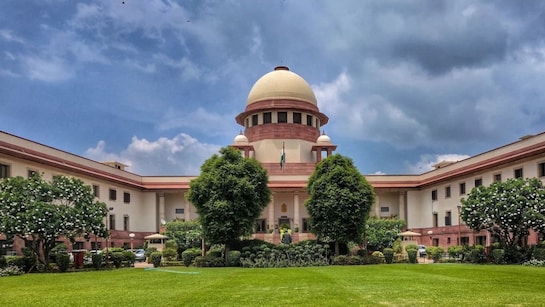
Background of the Case
The Supreme Court of India intervened to stay the circulation of a school textbook containing a chapter discussing alleged corruption in the judiciary.
The Court expressed concern that the material could undermine public confidence in the judicial system, especially among young students.
The matter arose after objections were raised regarding the content portraying the judiciary in a negative and generalized manner.
Key Observations of the Court
The judiciary is a pillar of constitutional democracy, and public trust in courts must be preserved.
While criticism of institutions is permissible, unverified or sweeping allegations may damage the credibility of the justice delivery system.
Educational content must be balanced, factual, and responsible, particularly when dealing with constitutional institutions.
Constitutional Conflict Highlighted
Freedom of Expression vs Institutional Integrity
1. Freedom of Speech and Expression
Protected under Article 19(1)(a) of the Constitution.
2. Reasonable Restrictions
Article 19(2) allows restrictions in the interest of:
(a) Contempt of Court
(b) Public order
(C) Defamation
3. Protection of Judicial Authority
The Supreme Court has the power to punish for contempt under Article 129.
Legal Framework Involved
1. Contempt Jurisdiction
Contempt of Courts Act, 1971
Section 2(c) – Criminal Contempt
Publication that scandalizes or tends to scandalize the authority of any court.
Section 12 – Punishment for contempt.The Court considered whether such textbook material could amount to scandalizing the judiciary.
2. Academic Freedom vs Constitutional Responsibility
Academic discussions are allowed in a democracy.
However, educational material influencing minors must maintain constitutional sensitivity.
Important Supreme Court Precedents (Similar Cases)
E.M.S. Namboodiripad v. T.N. Nambiar
A Chief Minister criticized the judiciary as a tool of class oppression.
The Court held that statements scandalizing the judiciary may amount to contempt.
Principle:
Freedom of speech does not extend to undermining public confidence in courts.
In Re: Arundhati Roy
The Court held that deliberate attempts to lower the authority of the judiciary constitute contempt.
Principle:
Criticism is allowed, but malicious or reckless allegations are punishable.
Indirect Tax Practitioners Association v. R.K. Jain
The Court clarified that fair criticism of the judiciary is permissible if made in good faith and based on facts.
Principle:
Constructive criticism strengthens democracy.
Probable Judiciary Exam Questions
Prelims
Which Article of the Constitution empowers the Supreme Court to punish for contempt?
Answer: Article 129
Mains
“Criticism of the judiciary is permissible in a democracy but cannot cross the boundary into contempt.” Discuss with case laws.
Why This News Is Important for Judiciary / APO Exams
Tests Contempt of Court law
Involves constitutional interpretation of free speech
Illustrates limits of academic freedom
Relevant for essay, mains answers, and interview questions