Background of the Issue
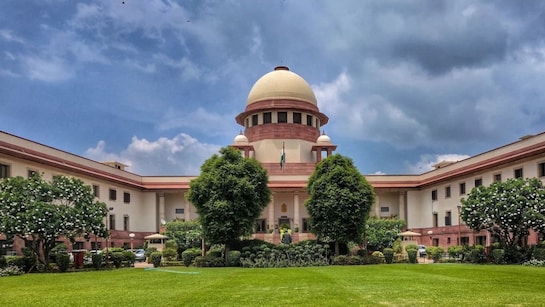
The Supreme Court recently addressed an important procedural question:Whether a person who was not originally a party to a case can challenge the judgment if it adversely affects their legal rights.
The issue arose when individuals whose interests were affected by a court decision sought to challenge the ruling despite not being formal litigants in the proceedings.
Key Observation of the Supreme Court
The Court held that a person who is not formally impleaded as a party may still approach the court if the judgment prejudicially affects his or her rights or interests.
Denying such a remedy would violate principles of fairness and access to justice.
The Court emphasized that procedural technicalities cannot override substantive justice.
Legal Principle Established
The judgment reinforces the following legal doctrines:
(a) Principle of Natural Justice
Audi Alteram Partem (hear the other side).
No person should suffer a legal consequence without being given an opportunity to be heard.
(b) Right to Access Justice
Courts must ensure that persons whose rights are affected by judicial orders have an opportunity to seek redress.
(c) Substantive Justice Over Procedural Formalities
The justice system must prioritize fair adjudication rather than rigid procedural barriers.
Relevant Constitutional Provisions
Important constitutional provisions involved include:
Article 136
Provides the Special Leave Petition (SLP) power to the Supreme Court.
Allows the Court to grant leave to appeal from any judgment, decree, or order of any court or tribunal.
Article 142
Empowers the Supreme Court to pass any order necessary to do complete justice in a case.
Article 21
Guarantees right to life and personal liberty, which has been judicially interpreted to include access to justice and fair procedure.
Relevant Statutory Provisions
(1) Code of Civil Procedure
Order I Rule 10
Court may add or strike out parties whose presence is necessary for effective adjudication.
Section 96
Provides the right of first appeal against a decree.
Order XLVII Rule 1
Governs review of judgments when new evidence or error apparent exists.
(2) Constitution of India
Article 136 – Special Leave Petition
Article 142 – Complete justice
Article 21 – Fair procedure and access to justice
Limitation Act, 1963
Prescribes time limits for filing appeals, revisions, or review petitions.
Even a non-party challenging a judgment must comply with limitation requirements.
Practical Implication of the Ruling
The decision clarifies that:
Persons adversely affected by a judgment can challenge it even if they were not parties.
Courts may permit such persons to:
(a) file a review petition
(b) file an appeal
(c) approach the Supreme Court through SLP
This strengthens access to justice and procedural fairness.
8. Possible Judiciary Examination Question
Question:
Can a person who was not a party to the proceedings challenge a judgment that affects his rights? Discuss with reference to principles of natural justice and relevant statutory provisions.
Answer approach
Concept of aggrieved person
Supreme Court’s observation
Constitutional provisions (Articles 136, 142, 21)
CPC provisions (Order I Rule 10, Order XLVII)
Application of natural justice